Mostrando entradas con la etiqueta Asia. Mostrar todas las entradas

jueves, 25 de abril de 2013

視頻 (Videos) about China II

Subjects of this compendium:

-The International Financial Crisis spurred great interest in Chinese investment. China's Sovereign Wealth Fund, the CIC, has enjoyed some significant successes as a result. But recovery has brought along political roadblocks to keep Chinese money out. That has made the CIC's job more difficult. Today Tian Wei spoke to CIC Vice Chairman and President Gao Xiqing, who is also an NPC deputy.


-Investments from China -- Reality or Just a Dream? - Panel 3
Moderator: Mr. Urmas Varblane, Vice Dean of the University of Tartu• 
How to Attract Chinese Investments into the EU? Mr. Markku Taulamo, Partner, TT Capital Advisors Ltd.


-For over a decade trade and investment relations between China and Latin America have flourished. China and many of its new Latin American partners, especially in resource-rich South America, have emphasized the complementary, win-win nature of the relationship. But the honeymoon period between China and Latin America appears to be coming to a close as some Latin American countries, such as Brazil, become increasingly worried about rising commodity dependency and as China faces rising anxiety over increasingly unstable relations with countries like Venezuela. This talk will explore the background and implications of this important and evolving set of political and economic relationships. 

Speaker Bio
Matt Ferchen is an associate professor in the Department of International Relations at Tsinghua University and a resident scholar at the Carnegie-Tsinghua Center for Global Policy, both in Beijing. Ferchen has an MA in China and Latin American Studies from SAIS and a Ph.D. in comparative politics from Cornell. 

Co-hosted by the SFS Center for Latin American Studies

miércoles, 24 de abril de 2013

視頻 (Videos) about China I

Subjects of this compendium:

-Helen Siu ,professor of anthropology , talk about China's urban revolution:


-Jon Huntsman, former U.S. Ambassador to China, and Kevin Rudd, former Prime Minister of Australia, along with Keith Richburg, former Washington Post Bureau Chief and China correspondent, engaged in a panel conversation on the challenges and opportunities posed by China's global growth.


-North Korea's highly provocative threats against the United States and South Korea have raised tension and fear around Asia-Pacific. China has called for restraint.


martes, 23 de abril de 2013

10 Major 城市 (Cities) of China

 十(10)
Chengdu
4,308,900 
GDP US$ 83 billion
Sub-provincial city


九 (9)
Nanjing
   5,105,900
GDP US$ 116 billion
Sub-provincial city


  八 (8)
  Shantou
   5,167,400 
GDP US$ 19.25 billion
Prefecture-level city


  七 (7)
   Wuhan
     5,412,800
GDP US$ 100 billion
Sub-provincial city


六(6)
Tianjin
5,688,600
GDP US$ 207 billion
Municipality (National central city)


五(5)
Guangzhou
6,642,800
GDP US$ 192 billion
Sub-provincial city (National central city)


  四 (4)
   Hong Kong
    6,780,000
GDP US$ 243 billion
Special Administrative Region


三 (3)
Chongqing
7,873,800
GDP US$ 184.23 billion
Municipality (National central city)


二 (2)
Beijing
  9,645,600
GDP US$ 282.5 billion 
Municipality (National central city)


 一(1)
Shanghai
   12,286,300
GDP US$ 297 billion
Municipality (National central city)


domingo, 21 de abril de 2013

What Caused The Deadly China 地震 (Earthquake)?


The strong earthquake that struck China's Sichuan province at 8:47 a.m. local time Saturday (April 20) probably hit along the same fault as the region's devastating 2008 earthquake, according to the U.S. Geological Survey.
The epicenter of the magnitude-6.6 earthquake was likely on the Longmen Shan Fault, the USGS said in a report on the April 20 quake. It was centered at a relatively shallow 7.6 miles (12.3 kilometers) below the surface, similar to the 2008 temblor. The 2008 earthquake, a magnitude 7.9, killed more than 69,000 people and released 89 times more energy than yesterday's earthquake.
The Longmen Shan Fault is actually a zone of tectonically-related thrust faults that mark the boundary between the high Tibetan Plateau and the Sichuan Basin lowlands. With each earthquake, a fault thrusts the plateau over the basin, shortening the distance between the two regions. The fault zone stretches more than 150 miles (240 km) along the base of the Longmen Shan Mountains. The mountain front is known for its amazingly steep rise — from 2,000 feet (600 meters) elevation in the basin to 21,325 feet (6,500 m) in the mountains, all in just 30 miles (50 km).
The earthquakes in Sichuan ultimately result from the collision between the Indian and Eurasian tectonic plates, according to the USGS. As India drives northward into Asia, it forces the Tibetan Plateau out of its way, eastward into China.
The geologic setting of the Sichuan Basin also worsens earthquake damage. As seismic waves travels across the basin's deep pile of sediments, the waves slow down, spending more time shaking the area, according to a Caltech report prepared after the 2008 earthquake. Their strength also increases, compounding damage from shaking, the report said.
More than 175 people were reported killed and 6,700 people injured in Saturday's earthquake, which was centered about 80 miles (129 km) southwest of Chengdu, the capital of Sichuan Provice. However, reports have not come in from remote mountain villages, which could be damaged by landslides.
Some of China's biggest earthquakes have hit along the Longmen Shan Fault, including four magnitude-6.0 or bigger temblors in the past 40 years, the USGS said. The magnitude-7.5 Diexi earthquake in 1933 killed more than 9,300 people.
Email Becky Oskin or follow her @beckyoskin. Follow us @OAPlanet, Facebook & Google+. Original article on LiveScience's OurAmazingPlanet.


China earthquake: Aftershocks hamper rescue efforts

http://www.bbc.co.uk/news/world-europe-22236884

sábado, 20 de abril de 2013

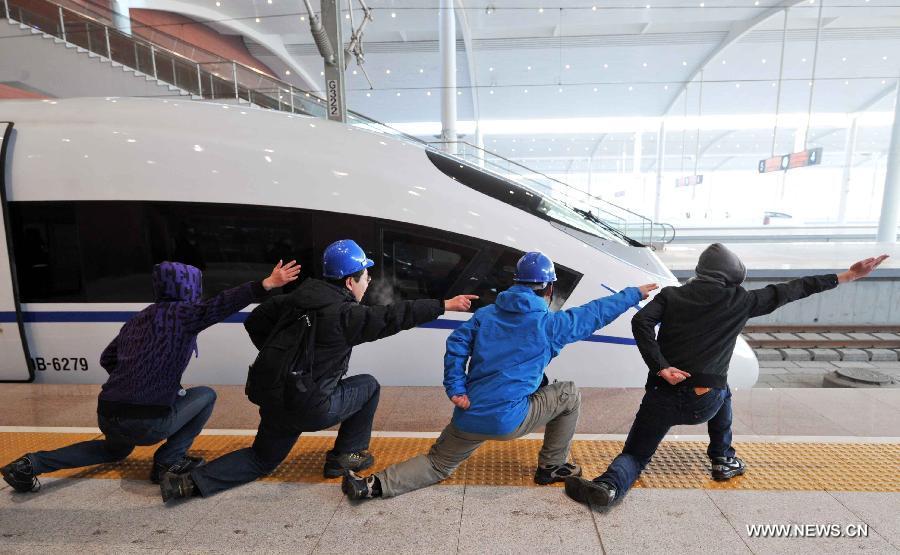
8 majors rail/train 項目 (projects) in China

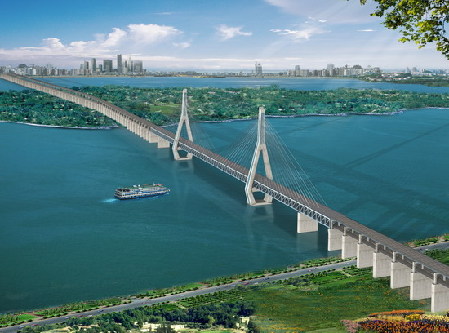
$1.7 BILLION: The Wuhan Tianxingzhou Yangtze River Bridge is a combined road and rail bridge across the Yangtze River in the city of Wuhan.


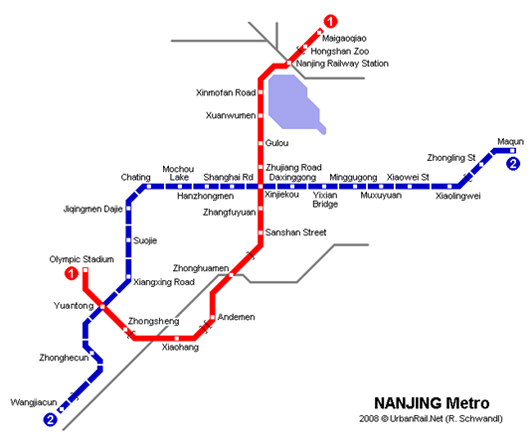
$1.7 BILLION: The Nanjing Metro Line was completed in 2005 and is used by almost 180 million people a year


$2.12 BILLION: The Wuhan Railway Station serves the world's fastest trains at 217 mph


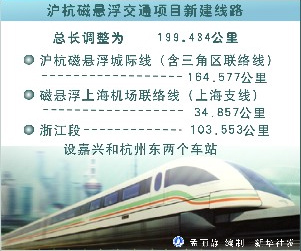
$5 BILLION:The Shanghai-Hangzhou maglev project will create the fastest inter-city train in the world at 280 mph


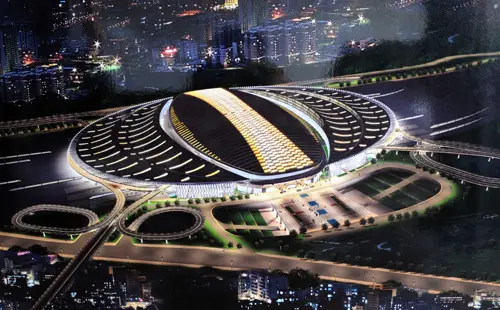
$6.3 BILLION: The Beijing South Railway Station is Asia's largest railway station


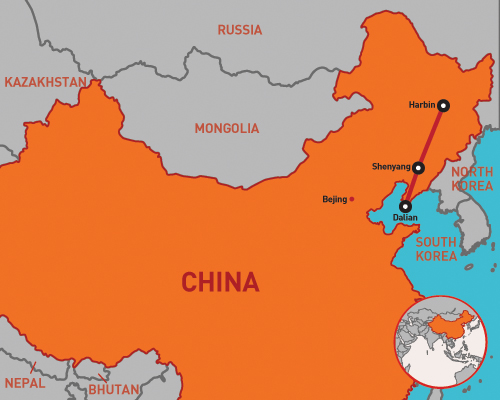
$14 BILLION: The Harbin–Dalian High-Speed Railway will serve the first high speed train in northeast China


$33 BILLION: The Beijing Shanghai High Speed Railway is the world's longest high-speed rail project


$38 billion:  Zhangzhou and Fuzhou-Xiamen railway projects