Mostrando entradas con la etiqueta china. Mostrar todas las entradas

martes, 30 de abril de 2013

In China, U.S. top military 軍官 (officer) defends U.S. pivot to Asia


By Terril Yue Jones
BEIJING | Mon Apr 22, 2013 10:23 am EDT

(Reuters) - The United States' top military officer on Monday defended the re-orientation of U.S. foreign policy towards Asia in front of his Chinese counterpart, a week after Beijing criticized Washington for ramping up its military presence in the region.

China is uneasy with what the United States has called the "rebalancing" of forces as Washington winds down the war in Afghanistan and renews its attention further east.

China says the policy has emboldened Japan, the Philippines and Vietnam in longstanding territorial disputes with Beijing.

U.S. Chairman of the Joint Chiefs of Staff Gen. Martin Dempsey said the United States "has been and will continue to be a Pacific power.

"We seek to be a stabilizing influence in the region," Dempsey said at a news conference at China's Ministry of National Defense. "In fact, we believe it would be our absence that would be destabilizing in the region, not our presence."

Dempsey was speaking at a joint press conference with Chinese Chief of the General Staff of the Chinese People's Liberation Army Fang Fenghui after both sides held talks earlier in the day.

China's defense ministry made a thinly veiled criticism of the United States last week for increasing tensions in the Asia-Pacific, saying China faces "multiple and complicated security threats" due to the U.S. strategy.

Fang said there is a possibility that North Korea could launch a fourth nuclear test.

"We ask all sides to work on the North Koreans to stop the nuclear tests, and stop producing nuclear weapons," he said.

Fang reiterated China's stance that it is firmly opposed to nuclear tests by North Korea.

China is North Korea's main diplomatic and financial backer, but in recent months it has begun to express impatience with Pyongyang.

After weeks of threats of war by North Korea, Pyongyang said last week it would return to negotiations subject to a list of conditions, including the lifting of U.N. sanctions. The United States said it was seeking "clear signals" that the North would halt its nuclear weapons activities.

North Korea has moved two short-range missile launchers to its east coast, apparently indicating it is pushing ahead with preparations for a test launch, a South Korean news agency reported on Sunday.

When asked whether China was willing to delegate staff to set rules for global cybersecurity, Fang said that the Internet, "if it is not managed well, it may bring damaging consequences".

"If security cannot be guaranteed, it is not an exaggeration to say that the damage of consequences could be as serious as a nuclear bomb," he said.

Beijing and Washington have traded accusations in recent months of massive cyber intrusions. The United States says hacking attacks emanating from China have targeted U.S. government and corporate computer networks among others, stealing government and commercial data.

A U.S. computer security firm released a report in February saying a secretive Chinese military unit is believed to be behind a wave of hacking attacks against the United States.


(Writing by Sui-Lee Wee; Editing by Jon Hemming)  http://www.reuters.com/article/2013/04/22/us-china-usa-idUSBRE93L0LR20130422

8 most 流行 (popular) Chinese TV series of 2012


8. Xin Shu 心术


Xin Shu is a medical drama, reflecting the China`s high tensions between patients and doctors in recent years.


7. Fire Blue Blade 火蓝刀锋


It is a popular military TV series in the year of 2012.


6. The Legend of Ge Erdan(A Unique Militiman) 民兵葛二蛋


It is a 33 episodes TV series, telling interesting stories of a militia named Ge Erdan in Chinese countryside during World War 2.


5. Fu Chen 浮沉


Fu Chen was released on June 30th, 2012, starring Wang Yaoqing, Wang Zhifei, Bai Baihe, Zhang Jiayi, Yu Yue. It is an urban workplace TV series.


4. Jin Tailang’s Happy Life 金太狼的幸福生活


“Jin Tailang’s Happy life” is a urban romatic comedy with 40 episodes, starring Song Dandan and Du Yuan.


3. Cliff (Xuan Ya or The Brink) 悬崖


It is a classical Chinese spy TV series, starring Zhang Zeyi and Song Jia. It won three prizes of Gold Award, Best Screenplay and Best Actress on the 18th Shanghai TV Festival.


2. Empresses in the Palace(The Legend of Zhen Huan)后宫甄嬛传


This Qing dynasty drama focuses on the schemes in the Harem between Emperor Yong Zheng’s wives. Zhen Huan, initially a kind and innocent young lady, enters the palace and eventually finds herself caught in the conflict between the empress and concubines. Zhen Huan discovers that the palace is actually a cruel and harsh place, and learns how to survive on her own.


1. A Bite of China 舌尖上的中国


A Bite of China is a 2012 Chinese documentary television series on the history of food, eating, and cooking in China. It first appeared at the China Central Television in May 14th, 2012, and quickly gained much popularity. This seven-episode documentary series introduces the history and story behind foods of various kinds in more than 60 locations all around China.


viernes, 26 de abril de 2013

China's Gaofen-1 衛星 (satellite) successfully launched

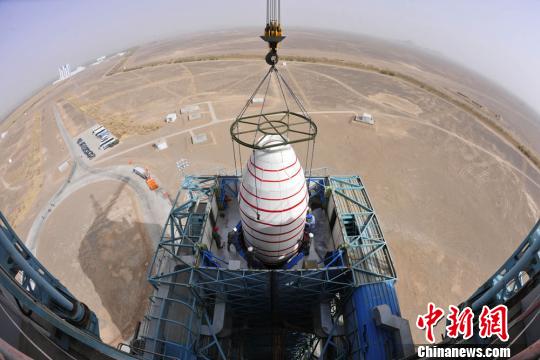
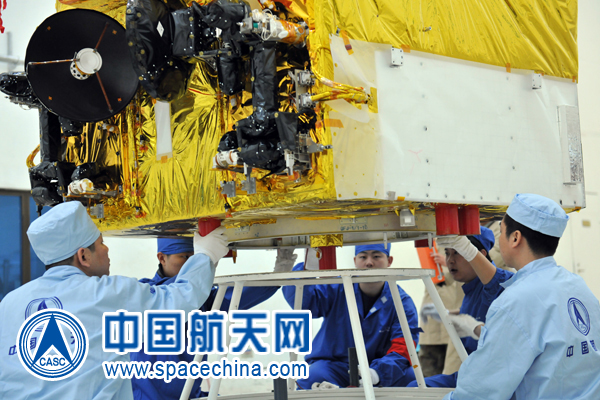
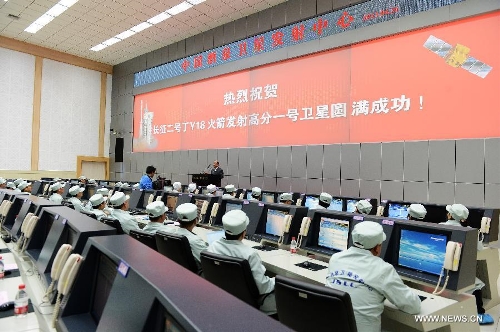
China successfully put high-definition earth observation satellite Gaofen-1 into orbit on April 26 at Jiuquan Satellite Launch Center in Gansu Province. The domestically designed satellite was launched by Long March 2D carrier rocket, together with three other satellites produced by Ecuador, Argentina and Turkey respectively, according to the Xinhua News Agency.


A Long March-2D carrier rocket carrying a high-definition earth observation satellite "Gaofen-1" and other three small satellites made by Ecuador, Argentina and Turkey as well as two satellite splitters from the Netherlands blasts off from the launch pad at the Jiuquan Satellite Launch Center in Jiuquan, Northwest China's Gansu Province, April 26, 2013. China successfully sent high-definition earth observation satellite "Gaofen-1" into space at 12:13 pm Beijing time on April 26. (Xinhua/Wang Peng)


jueves, 25 de abril de 2013

The 10th chinese city by population will have almost 300 km of metro in 2020


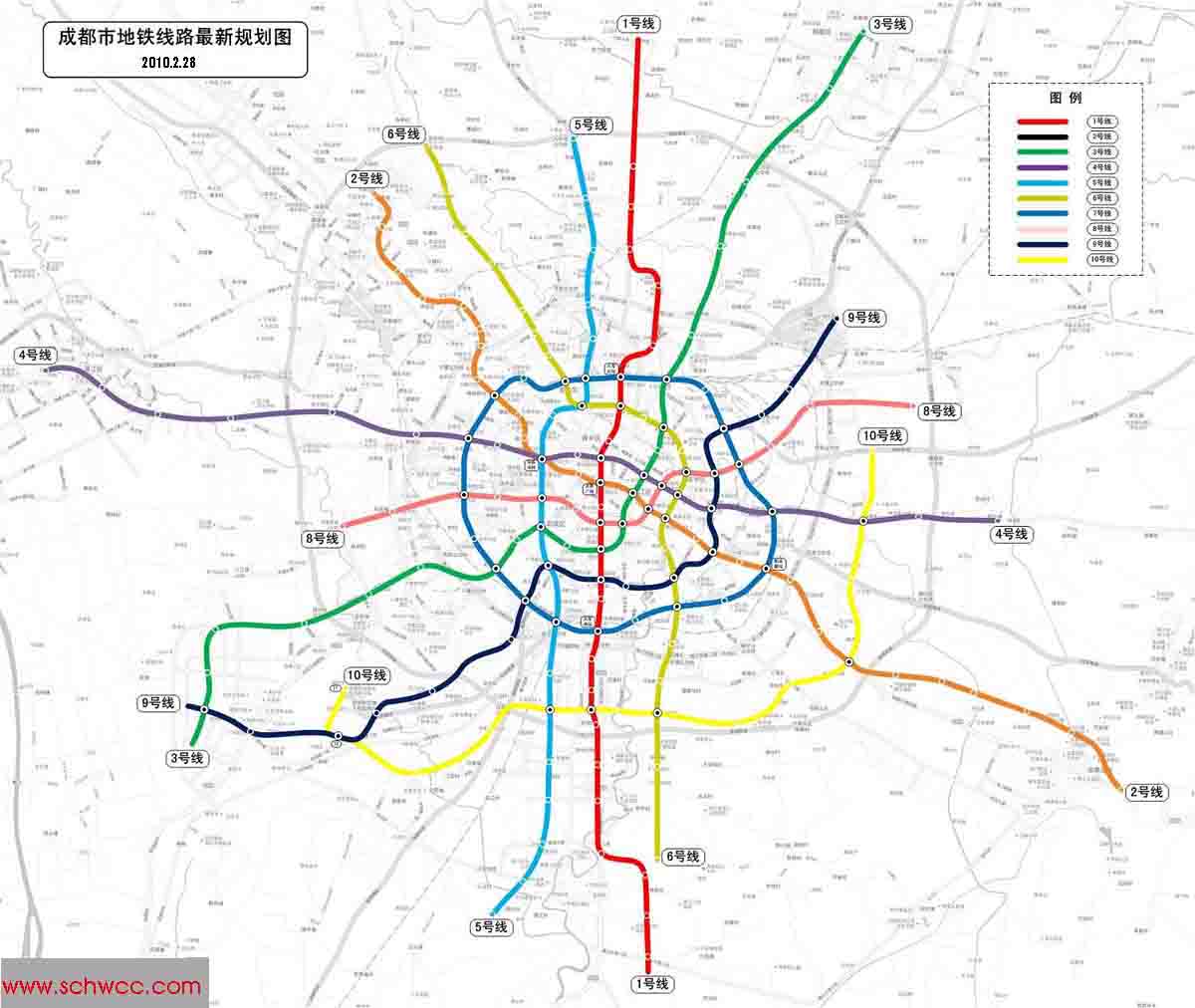
CHENGDU AIMS TO COMPLETE 291 KM OF METRO BY 2020


CHINA: The second phase of the Chengdu metro network which was approved on February 25 would see a further 183·3 km of line completed by 2020. Together with the Phase 1 works still in progress, this would take the network to 291·3 route-km and eight lines.

Line 1 will be extended at both ends: in the south, from the initial terminus at Guangdu to Tianfu Railway Station, and north from Shengxian Lake to Beisanhuan. These schemes would add 13 km and 10 stations.

Line 3 is due be extended by 15 km and nine stations from Hongpailou South to Shuangliu. A subsequent addition from Tianhezhen South to Hongxincun at the other end of the initial line would add another 12·7 km and eight stations.

Two extensions would give Line 4 another 15·5 km and 10 stations. The western section will link University City to Xibu Xincun, and the eastern will run from Shahe to Shiling.

The 39·4 km Line 5 is intended to connect Shangmaocheng North to Yingbin Road, with 31 intermediate stations. A southwestern extension to Huilong Road would add a further 9·6 km and six stations.

Line 6 will run between Chuanshiyingshi Xueyuan and Guangdong Road, giving a total length of 29 km with 25 stations. The 38·6 km circular Line 7 would have 31 stations, and connect with all other lines, as well as serving the city's North, East and South main line stations.

Line 10 will run for 10·5 km from Hongpailou South to the airport, with stations at terminals 1 and 2; there would also be stations at Jinhand Road South and Shenjiaqiao.

Source: Railway Gazette International


The concept of circular and semicicular lines is apllied.


martes, 23 de abril de 2013

10 Major 城市 (Cities) of China

 十(10)
Chengdu
4,308,900 
GDP US$ 83 billion
Sub-provincial city


九 (9)
Nanjing
   5,105,900
GDP US$ 116 billion
Sub-provincial city


  八 (8)
  Shantou
   5,167,400 
GDP US$ 19.25 billion
Prefecture-level city


  七 (7)
   Wuhan
     5,412,800
GDP US$ 100 billion
Sub-provincial city


六(6)
Tianjin
5,688,600
GDP US$ 207 billion
Municipality (National central city)


五(5)
Guangzhou
6,642,800
GDP US$ 192 billion
Sub-provincial city (National central city)


  四 (4)
   Hong Kong
    6,780,000
GDP US$ 243 billion
Special Administrative Region


三 (3)
Chongqing
7,873,800
GDP US$ 184.23 billion
Municipality (National central city)


二 (2)
Beijing
  9,645,600
GDP US$ 282.5 billion 
Municipality (National central city)


 一(1)
Shanghai
   12,286,300
GDP US$ 297 billion
Municipality (National central city)


Las Relaciones de China con América Latina y el Caribe


domingo, 21 de abril de 2013

What Caused The Deadly China 地震 (Earthquake)?


The strong earthquake that struck China's Sichuan province at 8:47 a.m. local time Saturday (April 20) probably hit along the same fault as the region's devastating 2008 earthquake, according to the U.S. Geological Survey.
The epicenter of the magnitude-6.6 earthquake was likely on the Longmen Shan Fault, the USGS said in a report on the April 20 quake. It was centered at a relatively shallow 7.6 miles (12.3 kilometers) below the surface, similar to the 2008 temblor. The 2008 earthquake, a magnitude 7.9, killed more than 69,000 people and released 89 times more energy than yesterday's earthquake.
The Longmen Shan Fault is actually a zone of tectonically-related thrust faults that mark the boundary between the high Tibetan Plateau and the Sichuan Basin lowlands. With each earthquake, a fault thrusts the plateau over the basin, shortening the distance between the two regions. The fault zone stretches more than 150 miles (240 km) along the base of the Longmen Shan Mountains. The mountain front is known for its amazingly steep rise — from 2,000 feet (600 meters) elevation in the basin to 21,325 feet (6,500 m) in the mountains, all in just 30 miles (50 km).
The earthquakes in Sichuan ultimately result from the collision between the Indian and Eurasian tectonic plates, according to the USGS. As India drives northward into Asia, it forces the Tibetan Plateau out of its way, eastward into China.
The geologic setting of the Sichuan Basin also worsens earthquake damage. As seismic waves travels across the basin's deep pile of sediments, the waves slow down, spending more time shaking the area, according to a Caltech report prepared after the 2008 earthquake. Their strength also increases, compounding damage from shaking, the report said.
More than 175 people were reported killed and 6,700 people injured in Saturday's earthquake, which was centered about 80 miles (129 km) southwest of Chengdu, the capital of Sichuan Provice. However, reports have not come in from remote mountain villages, which could be damaged by landslides.
Some of China's biggest earthquakes have hit along the Longmen Shan Fault, including four magnitude-6.0 or bigger temblors in the past 40 years, the USGS said. The magnitude-7.5 Diexi earthquake in 1933 killed more than 9,300 people.
Email Becky Oskin or follow her @beckyoskin. Follow us @OAPlanet, Facebook & Google+. Original article on LiveScience's OurAmazingPlanet.


China earthquake: Aftershocks hamper rescue efforts

http://www.bbc.co.uk/news/world-europe-22236884

sábado, 20 de abril de 2013

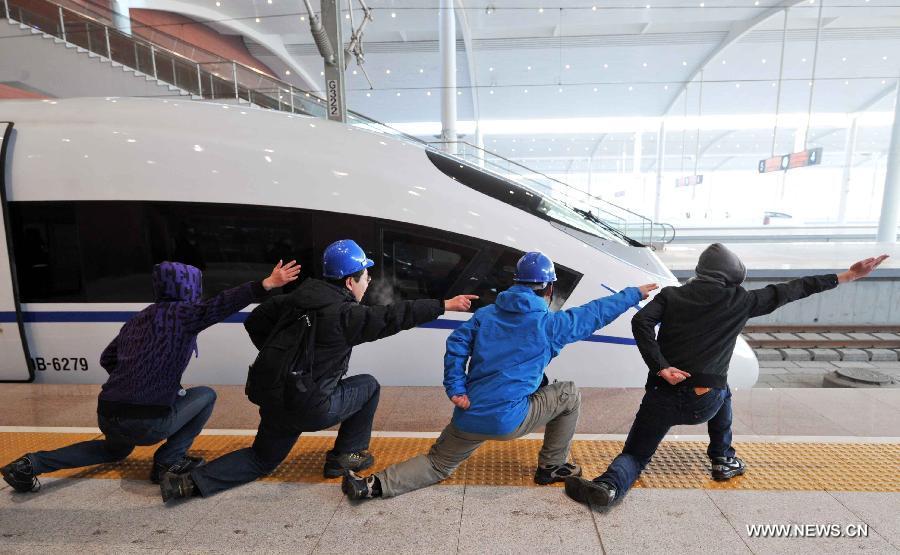
8 majors rail/train 項目 (projects) in China

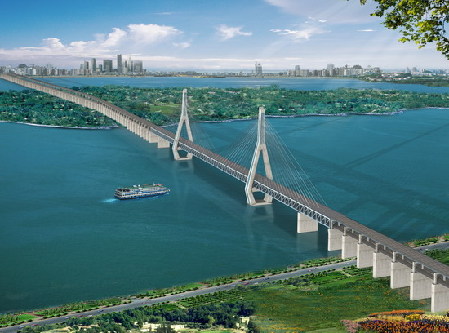
$1.7 BILLION: The Wuhan Tianxingzhou Yangtze River Bridge is a combined road and rail bridge across the Yangtze River in the city of Wuhan.


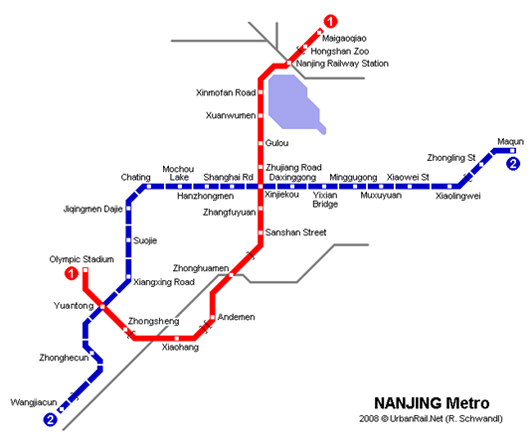
$1.7 BILLION: The Nanjing Metro Line was completed in 2005 and is used by almost 180 million people a year


$2.12 BILLION: The Wuhan Railway Station serves the world's fastest trains at 217 mph


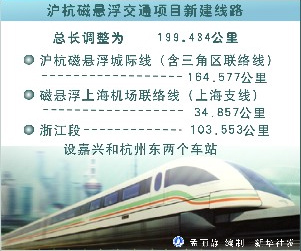
$5 BILLION:The Shanghai-Hangzhou maglev project will create the fastest inter-city train in the world at 280 mph


$6.3 BILLION: The Beijing South Railway Station is Asia's largest railway station


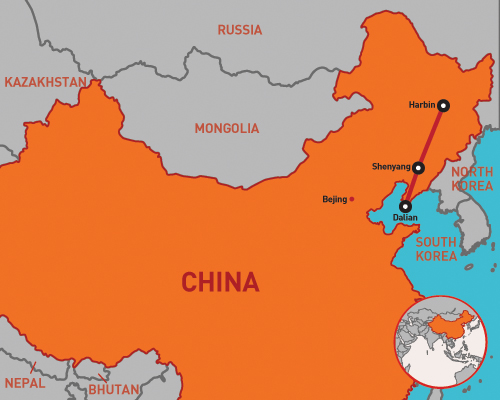
$14 BILLION: The Harbin–Dalian High-Speed Railway will serve the first high speed train in northeast China


$33 BILLION: The Beijing Shanghai High Speed Railway is the world's longest high-speed rail project


$38 billion:  Zhangzhou and Fuzhou-Xiamen railway projects